

Nardò technical center and university of salento inaugurate the simlab: a new simulation lab for the mobility of the future.
The University of Salento and Nardò Technical Center inaugurate the SimLab, a new laboratory dedicated to research in the field of digital simulation and the development of solutions for future mobility.
The University of Salento and Nardò Technical Center inaugurate a new laboratory dedicated to research in digital simulation and the development of solutions for the mobility of the future.
Equipped with a high-precision dynamic simulator and Digital Twin systems, the laboratory will make it possible to conduct tests on virtual models and compare the results in near real time with those carried out on track, further enhancing the efficiency of the methods.
Students and researchers will work alongside NTC experts to strengthen validation methods of advanced driver-assistance systems, study human–vehicle interaction, and integrate AI-based features into future mobility models.
The initiative confirms the University of Salento as a center of scientific excellence and a strategic partner capable of creating new opportunities for students and researchers.
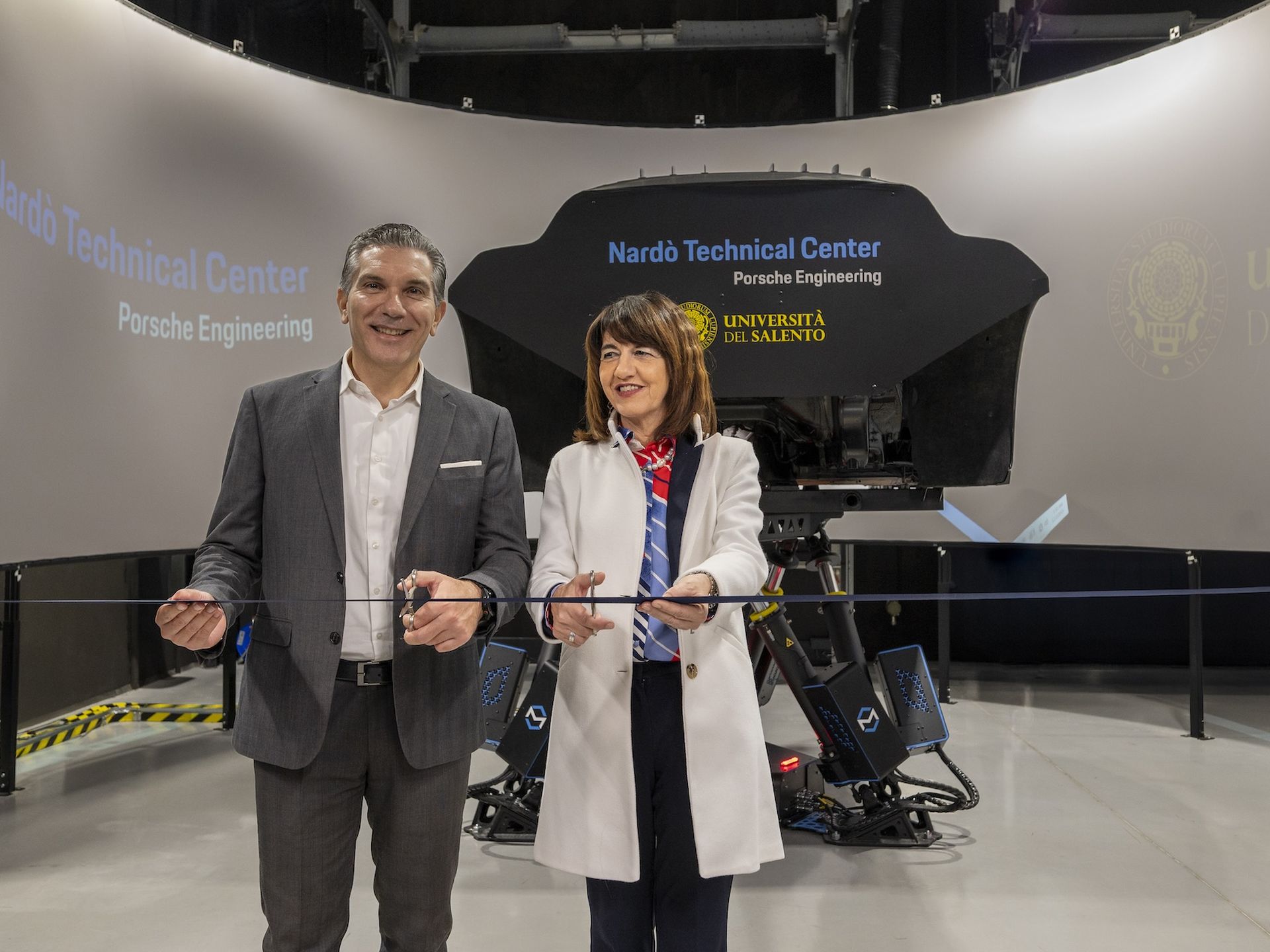
Conceived as a bridge between academic research and industry, the project aims to create a shared platform to study and test new driving technologies and intelligent mobility models through advanced systems based on virtual vehicle models and traffic flows within digital urban environments. The SimLab is equipped with cutting-edge technologies and is still a rare facility on the national scene, directly promoted by university research.

At the heart of the laboratory is a high-precision dynamic simulator capable of offering an immersive and realistic driving experience, faithfully replicating the mechatronic structure of a vehicle. Thanks to Digital Twin technology, infrastructures and tracks such as the Ecotekne campus of the University of Salento and NTC’s “Handling” track can be virtually reproduced. This virtualization will make it possible to simulate complex scenarios that are difficult to reproduce on track, such as poor visibility or varying weather conditions.
Located in a dedicated workshop inside NTC, with permanent access for researchers and just a few meters from the test tracks, the SimLab integrates advanced simulation and field testing, making development and validation processes more effective and efficient.
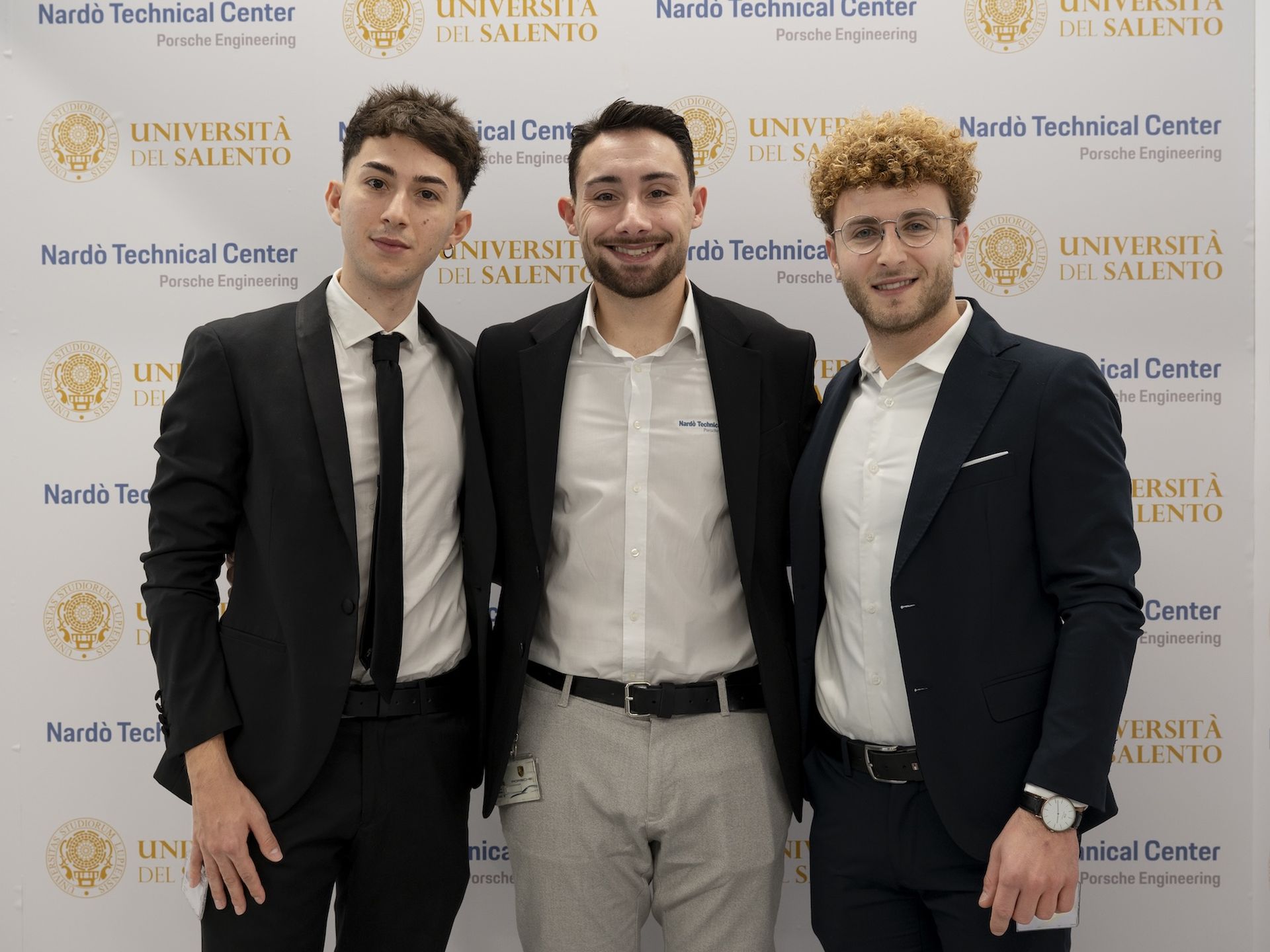
Students and researchers are already involved in the project through theses, doctoral programs, and experimental activities carried out with NTC engineers, with the goal of developing new innovative solutions for road safety and the study of human–vehicle interaction. Among the current university activities is also the creation of a digital urban model capable of reproducing real environments and assessing the impact of different mobility choices (such as speed limits, traffic regulations, or road network changes) on the environment and public health.
The laboratory will also allow tests using wearable devices equipped with biometric sensors to monitor drivers’ reactions during simulated driving and adapt onboard systems accordingly. In the future, the SimLab will continue to evolve by integrating AI-based features and technologies to generate increasingly complex and realistic traffic scenarios and driving conditions.
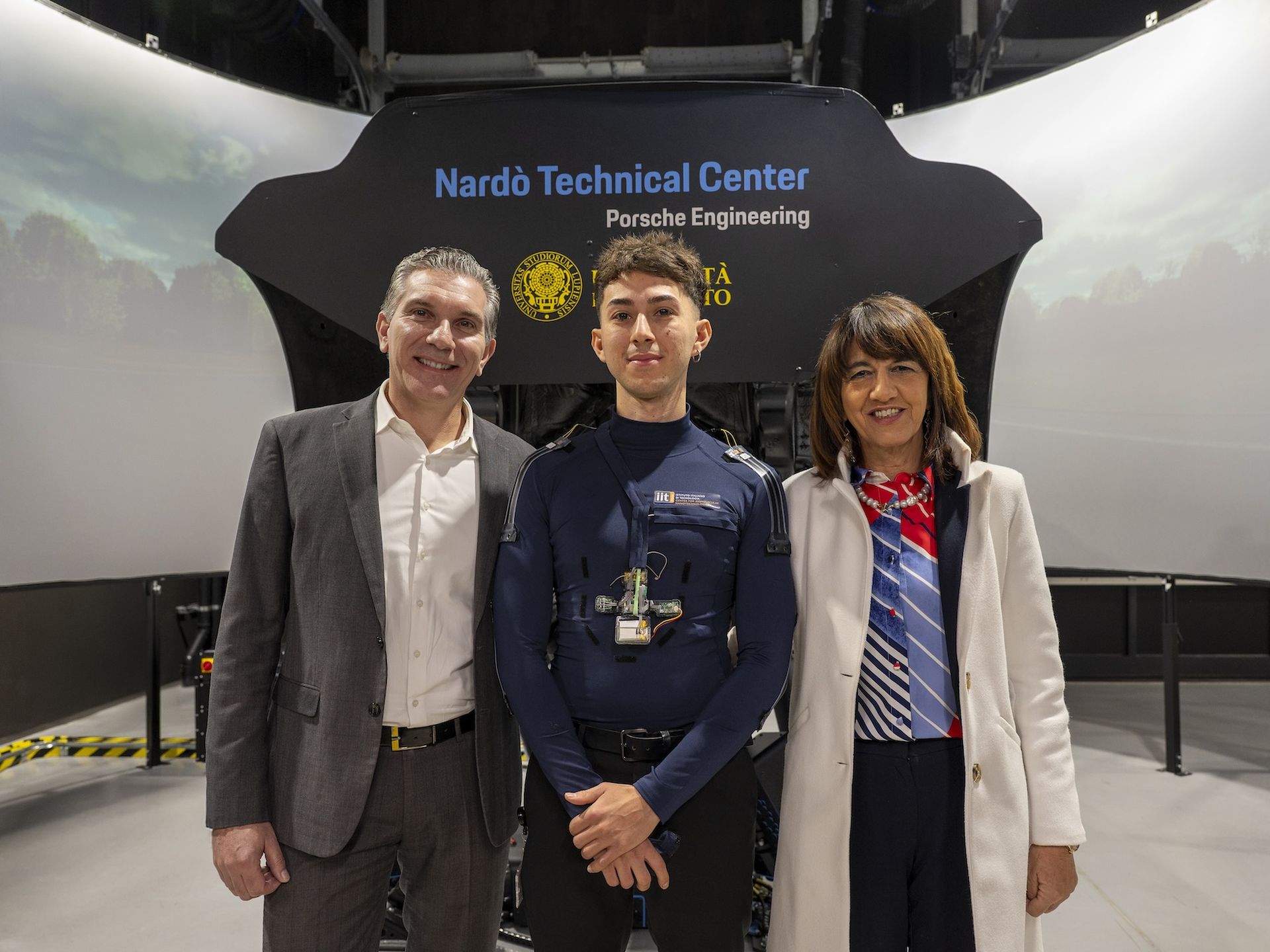
“The opening of the SimLab marks a strategic step forward for our university: a place where research, technology, and skills come together to design the mobility of the future,” says Maria Antonietta Aiello, Dean of the University of Salento. “Thanks to our long-standing collaboration with Nardò Technical Center, we offer students and researchers access to some of the most advanced simulation tools in Italy, capable of accelerating the development of innovative and safe mobility solutions. This laboratory strengthens the role of the University of Salento as a scientific benchmark and reliable partner for local industry, as well as a center of research excellence.”
“We are pleased to continue our collaboration with the University of Salento, which over the years has generated concrete and valuable results,” says Antonio Gratis, General Manager of Nardò Technical Center. “The SimLab is a project born from this synergy and allows us to open the doors of the center to young people in the area to build innovation together. It is also an excellent opportunity to expand our technological expertise. With the SimLab, we aim to contribute to research for the development of today’s and tomorrow’s mobility, particularly in the field of driver-assistance systems and vehicle dynamics.”
NTC
Nardò Technical Center (NTC) is a vehicle development and testing center located in Puglia, Southern Italy. Covering 700 hectares, it hosts 20 state-of-the-art tracks and facilities, including the 12.6-kilometer high-speed ring, which enables extreme-condition testing for manufacturers and suppliers from all over the world. Its activities range from physical testing to simulation, from software development to digital innovation, supported also by a software unit based in Lecce. Founded in 1975, it is owned by Porsche and has been managed by Porsche Engineering since 2012. It employs over 200 professionals and has hosted some of the most advanced testing and development programs in the sector, serving more than 90 global automotive companies. From high-speed tests to sophisticated simulations, NTC continues to contribute to the evolution of connected, intelligent, and safe mobility.
UNISALENTO
The University of Salento is recognized for the quality of its scientific output and its cutting-edge research infrastructures. With nine departments and numerous centers and laboratories, UniSalento carries out high-profile work in fields ranging from engineering to digital technologies and artificial intelligence, from materials science to the environment and cultural heritage, from medicine to the humanities and social sciences. Thanks to strong collaborations with companies and institutions, international doctoral programs, and a strong ability to attract competitive funding, the University stands today as a national reference point for innovation, technology transfer, and the training of young researchers. Deeply rooted in the region yet open to the world, the University of Salento is built on values such as centrality of the person, commitment to quality, public responsibility, internationalization, and sustainable innovation.
Watch the event come to life in this video impressions.
Please note: all video and photographic material is property of Nardò Technical Center S.r.l. No images and/or videos may therefore be reproduced and/or transmitted in any form or by any means.